Cascadia AI Lab
Deep learning, computer vision, and bioacoustics AI for wildlife monitoring at scale — backed by expertise in ecology, computer science, and research computing.
AI Built for the Field, Not the Benchmark
Wildlife monitoring generates data at a pace that has long outrun our ability to review it manually. The Cascadia AI Lab exists to close that gap — deploying machine learning models that are trained for your specific taxa, your sensors, and your habitat, not optimized for generic benchmark datasets.
We bring together wildlife ecologists who understand the biology, computer scientists who understand the models, and research computing specialists who understand how to process data at scale. This combination — rare in the Pacific Northwest — means we can take a camera trap array or acoustic recorder network from raw data to species-level occupancy estimates without the research team ever touching a single image or audio file.
Bioacoustics is a core pillar of the lab. Through our partnership with the Pacific Northwest Bioacoustics Lab, led by Damon Lesmeister of the USDA Forest Service, we train custom acoustic detectors for owls, murrelets, and other forest birds — the species where conventional survey effort is most expensive and least conclusive.
Detections are not the end of the work. Together with the Cascadia Analysis Lab, we carry model output through to occupancy estimates, distribution models, and population inference — with the detection error and uncertainty of the classifier propagated rather than ignored. That is what turns a pile of predictions into a defensible scientific result, and into evidence a management or conservation decision can actually rest on.
Work With UsAI & Data Science Services
From raw sensor data to publication-ready ecological inference
Custom Camera Trap Classifiers
Species classifiers trained on your images and your target taxa, rather than a generic model applied to data it has never seen — tuned to your camera models, habitat types, and focal species. We deliver calibrated confidence scores, not just labels.
Custom Acoustic Detectors
Detectors trained for your focal species from AudioMoth, Swift, and Song Meter recordings. Our bioacoustics work centers on owls, murrelets, and other forest birds, where automated detection replaces survey effort that is otherwise expensive and inconclusive.
Automated Monitoring Pipelines
End-to-end workflows that ingest raw sensor output, apply inference, filter detections, and produce structured databases ready for downstream modeling — reducing manual review from months to days.
From Detections to Inference
Model output is a means, not a result. With the Cascadia Analysis Lab we take detections through to occupancy, distribution, and population estimates — propagating classifier error rather than treating predictions as truth, so the conclusions support publication and evidence-based management.
Tools & Featured Work
Peer-reviewed models and open-source software developed by the Cascadia AI Lab
PNW-Cnet
A convolutional neural network for automated species identification from passive acoustic recorders. Trained on Pacific Northwest forest recordings, PNW-Cnet detects northern spotted owls and other forest wildlife directly from AudioMoth and Swift audio — enabling survey-scale acoustic monitoring without manual review.
Read the PaperNJOBVU-AI
Open-source software for training custom computer vision models on camera trap imagery. NJOBVU-AI lowers the barrier to species-specific classifier development — providing a full active-learning workflow from raw images through model training, validation, and deployment, without requiring deep machine learning expertise.
Read the PaperDeployed Classifier Models
A growing library of custom computer vision classifiers trained for specific taxa, landscapes, and camera systems:
- Oregon Critters — multi-species classifier for Pacific Northwest mammals trained on large-scale Oregon camera trap datasets in partnership with NCASI
- Project Nkhotakota — species classifier for the Nkhotakota Wildlife Reserve in Malawi, trained on a rewilded savanna community following Africa's largest elephant translocation
People & Partnerships
Wildlife ecologists, computer scientists, and research computing specialists — working together with key partner organizations
Damon Lesmeister
Research Wildlife Biologist, USFS
USFS PNW Research Station →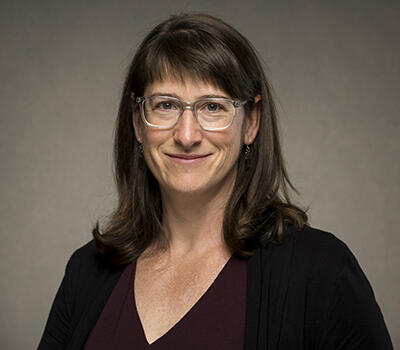
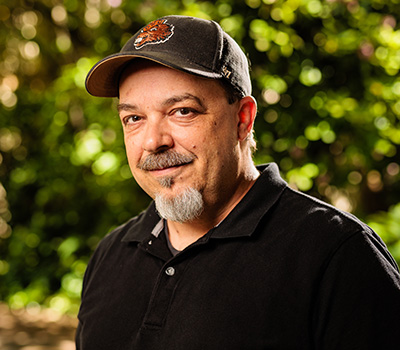
Chris Sullivan
Director, Research & Academic Computing, OSU
OSU Research Computing →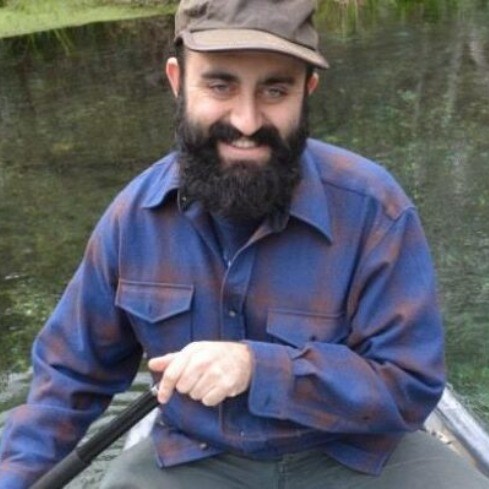
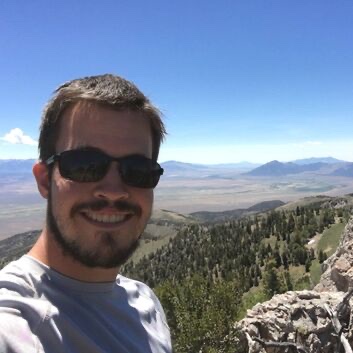
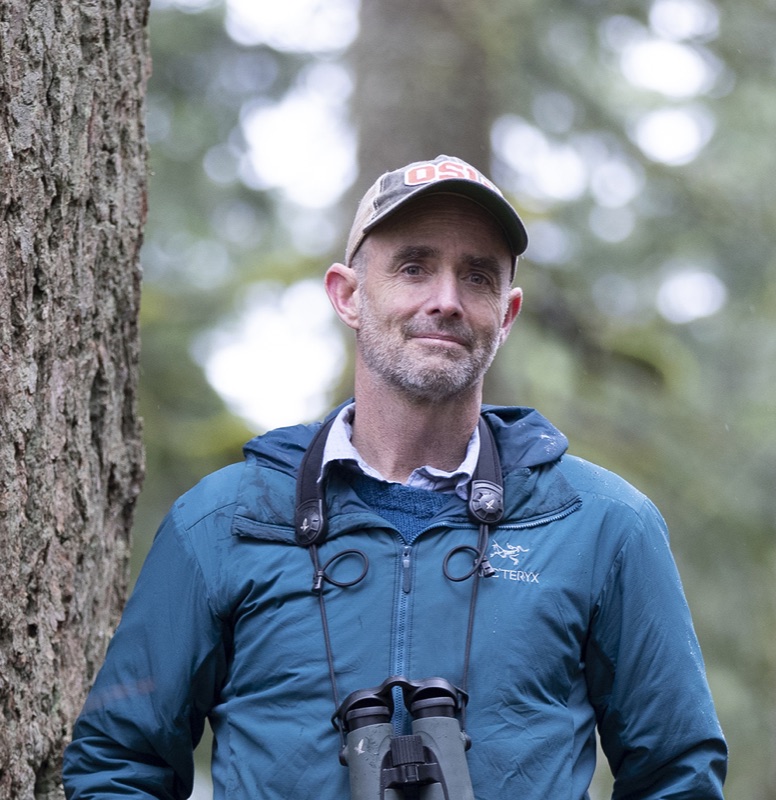
Matt Betts
Professor, Oregon State University
Forest Landscape Ecology Lab →Pacific Northwest Bioacoustics Lab
A core partner of the Cascadia AI Lab, led by Damon Lesmeister, the PNW Bioacoustics Lab brings deep expertise in passive acoustic monitoring hardware, deployment protocol design, and custom AI detection models. Together we offer integrated acoustic monitoring — from AudioMoth and Swift recorder deployment through detector training and occupancy-based population inference for owls, murrelets, and other forest birds.
PNW Bioacoustics Lab →NCASI
The National Council for Air and Stream Improvement (NCASI) is a partner organization that brings wildlife monitoring expertise and industry-scale data collection capacity to the Cascadia AI Lab. Katie Moriarty leads mammal-focused work at NCASI, and our collaboration allows us to train AI models on exceptionally large camera trap datasets spanning Pacific Northwest forest landscapes.
NCASI →