Evidence for
Conservation Decisions
Large field datasets, joined to molecular, analytical, and computational methods — producing the abundance, occupancy, distribution, and species interaction estimates that conservation decisions depend on.
Strong Evidence for
Hard Questions
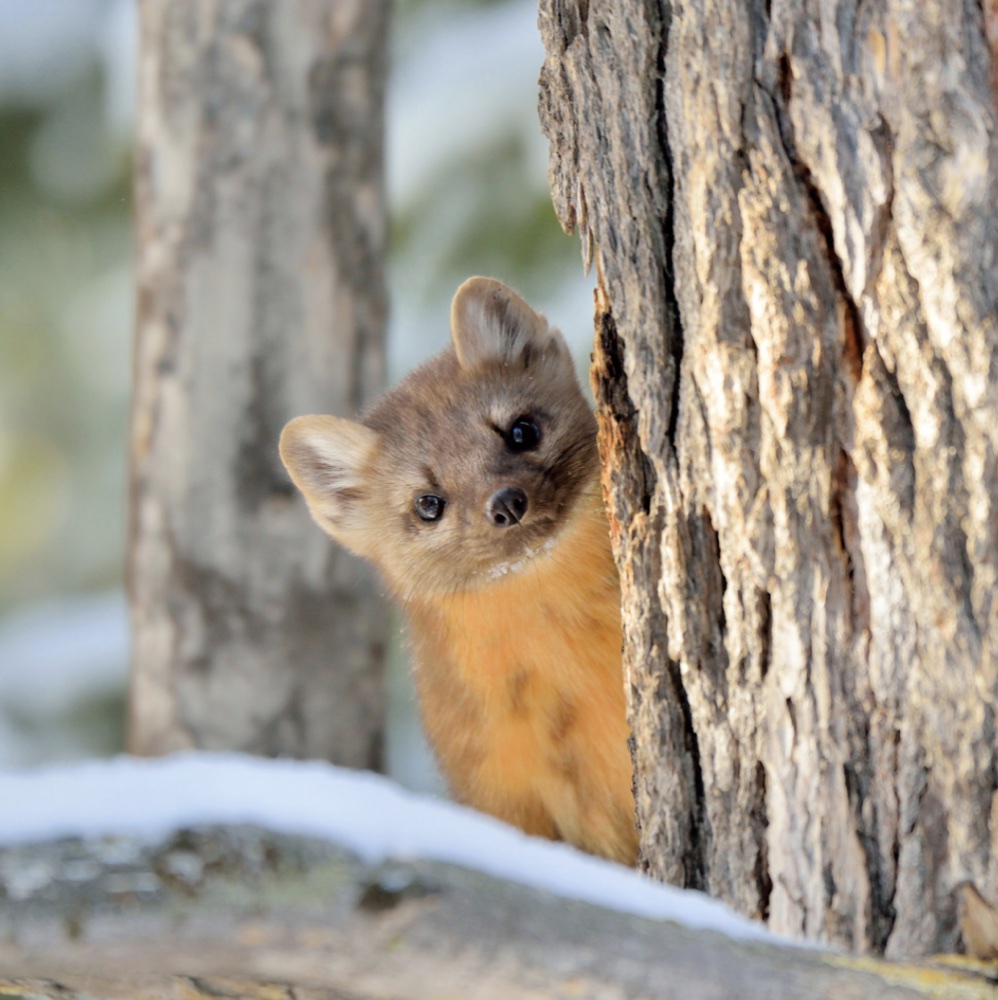
Northern spotted owls, marbled murrelets, Humboldt martens, fishers, wolverines — the animals at the center of Pacific Northwest conservation are rare, wide-ranging, cryptic, and averse to being found. They are, in other words, exactly the species for which conventional survey methods produce the least reliable answers.
How many there are is only one of the questions worth asking. Where a species occurs and how that range is shifting, which habitat it actually uses rather than the habitat we assume it uses, how it interacts with competitors and predators, what it eats — each of these shapes conservation decisions as much as abundance does, and each demands different evidence. So alongside density and population size we work on occupancy, species distributions, habitat associations, and species interactions.
What makes those questions tractable is the combination: large field datasets — camera trap arrays, acoustic recorder networks, GPS telemetry, noninvasive genetic samples — joined to molecular, analytical, and computational methods strong enough to extract real signal from them. Any one of these alone leaves questions unanswerable. Together they make hard-to-study species tractable.
Our role is not to argue for particular outcomes. It is to make the underlying evidence good enough that the argument can be had honestly — with defensible uncertainty, published in the peer-reviewed literature, and documented to regulatory standards.
Work With UsFilms & Findings
Short films on what our fieldwork and analysis have turned up — from carnivore competition and coastal food webs to spotted owls, marbled murrelets, and the amphibians of cold headwater streams
Coverage
Journalism on the species, methods, and questions at the center of our work
Trapped Between Pavement and the Pacific
A surprisingly dense and isolated population of Humboldt martens in Oregon's coastal dunes is challenging assumptions about where the species can persist — and what threatens it.
by Julia Rosen Read the feature →Oregon's Timber Wars Special
Thirty years after the Timber Wars, scientists turn to bioacoustic monitoring to track a still-declining northern spotted owl population across protected forest.
Documentary Watch the film →Last Call: Tracking the Sound of the Spotted Owl's Extinction
Three decades after the spotted owl reshaped Northwest forest policy, biologists assess what hope remains — and what the acoustic record is telling them.
by Ian McCluskey Read the article →How AI Could Help Us Locate and Study Threatened Birds
Machine learning applied to passive acoustic recordings is changing what is possible in bird monitoring — turning years of audio into survey-scale detection data.
by Rolando Hernandez Listen & read →Conservationists Strive to Protect Oregon's Coastal Martens
Fewer than a few hundred coastal martens remain between Cape Perpetua and northern California, concentrated enough that a single event could be catastrophic.
by Juliet Grable Read the article →
Better Data, Better Decisions
Every capability described on this site — the genetics lab, the AI models, the analytical methods — exists because someone funded its development. Partners and supporters make the next set of hard-to-study species and hard-to-answer questions tractable.
Get In Touch